AI’s Golden Era of Discovery: How DeepMind Could Transform Medicine, Energy and Space Travel
Nobel Prize winner and DeepMind CEO Demis Hassabis predicts an AI golden age. Learn how Alpha Fold, AI drug discovery, AGI, and future space expansion could redefine science and human progress. AI’s Golden Era of Discovery: How DeepMind Could Transform Medicine, Energy and Space Travel
TECH AND SCIENCE
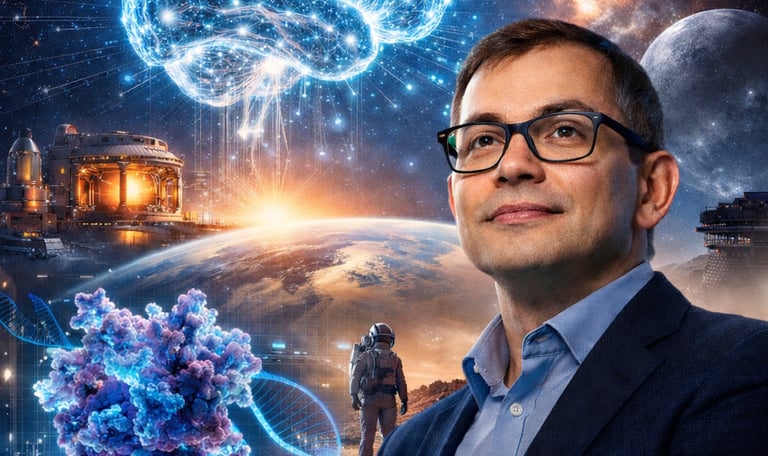
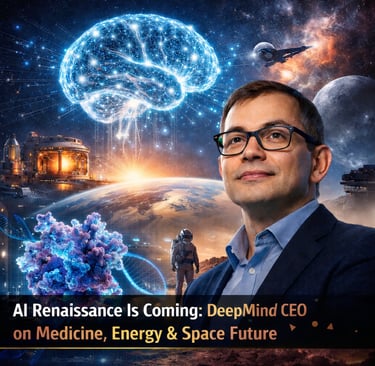
Demis Hassabis Envisions AI Renaissance: From Protein Folding to Galactic Exploration
Hey folks, if you've been following the AI revolution, you know Demis Hassabis isn't just another tech bro hyping the next big thing. This guy's a Nobel laureate who actually delivered: cracking the protein folding puzzle with Alpha Fold, a feat that earned him chemistry's top prize in 2024. Now, as CEO of Google DeepMind, he's dropping predictions that make sci-fi feel like it's arriving next Tuesday.
In a recent chat on Fortune's podcast with Editor-in-Chief Alyson Shontell, Hassabis laid out his bold vision: AI will spark a "new golden era of discovery" in the next 10-15 years. Picture medicine reinvented—no more one-size-fits-all pills, but hyper-personalized treatments curing diseases we thought unbeatable. Energy crises? Solved through fusion or next-gen solar. And yeah, he went there: humanity spreading to the stars.
The AlphaFold Leap That Changed Everything
Let's rewind to where it started. AlphaFold didn't just predict protein structures; it mapped 200 million of them, handing biologists a free cheat code to decades of lab drudgery. Now used by 3 million researchers globally, it's the poster child for AI accelerating science.
Hassabis is doubling down with Isomorphic Labs, his Alphabet spinoff turning that magic into actual drugs. They're in pre-clinical trials for cancer treatments, with human trials on the horizon by year's end. Last week, they unveiled a Drug Design Engine that supposedly crushes AlphaFold 3's accuracy by more than double in key areas. The promise? Drug discovery 1,000 times faster, ditching wet labs for digital simulations.
The Innovator's Tightrope
Of course, it's not all smooth sailing. Hassabis gets real about the "innovator's dilemma"—Google had to cannibalize its search empire to stay ahead. "If we don't disrupt ourselves, someone else will," he quipped. That mindset fueled the 2023 merger of Google Brain and DeepMind under his watch, creating what he calls a "nuclear power plant" of AI talent wired into Alphabet's empire.
At Davos last month, he upped the ante: 50% chance of artificial general intelligence by 2030. Radical abundance ahead, but only if we thread the needle. your text here...
What's Next for Us Mortals?
Hassabis paints a future where AI masters the scientific method itself, churning out breakthroughs like a tireless Renaissance genius. It's thrilling—and a tad terrifying. Will regulators keep up? Will jobs in pharma and energy vanish or evolve? One thing's clear: the old rules are toast.