Egg Nebula & Vanishing Stars: NASA’s New Discovery Is Rewriting Stellar Death Science
NASA discoveries reveal dying stars collapsing into black holes without explosions. Egg Nebula and failed supernovas are reshaping how scientists understand stellar death and black hole formation.Egg Nebula & Vanishing Stars: NASA’s New Discovery Is Rewriting Stellar Death Science
TECH AND SCIENCE
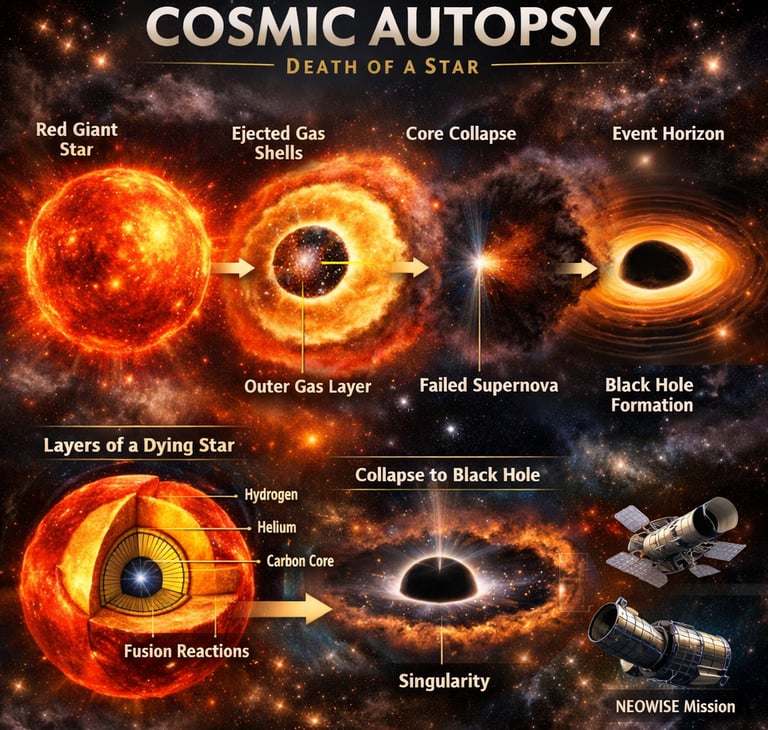
NASA's Cosmic Autopsy: Dying Stars That Whisper Instead of Explode
Hey folks, it's your space-obsessed reporter here, fresh off a deep dive into NASA's latest telescope treasures. If you've been scrolling through your feeds lately, you've probably seen the jaw-dropping images of the Egg Nebula—a dying star putting on a light show that's equal parts eerie and beautiful. But hold onto your telescopes, because there's more: astronomers just confirmed a star that vanished without a bang. No supernova fireworks, just... poof. Gone. Let's unpack what this means for our understanding of how stars say goodbye.
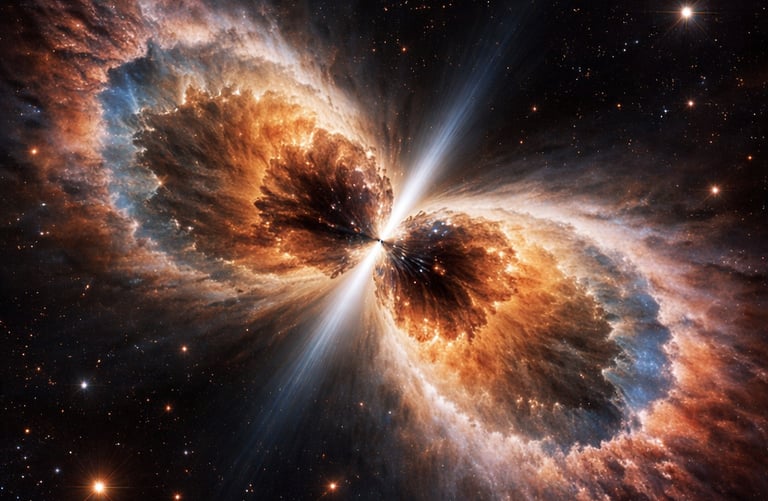
Picture this: 1,000 light-years away in the constellation Cygnus sits the Egg Nebula, caught in exquisite detail by the Hubble Space Telescope. Released just this week on February 10, the image shows a central star hidden behind a thick dust cloud, with twin beams of light piercing through like searchlights from some interstellar lighthouse. These beams light up concentric shells of gas the star has been puffing out over the last 5,000 years, with the most recent bipolar lobes bursting free in the past 400 years. It's not a violent supernova; it's more like a slow, sputtering finale from a carbon-rich core. NASA calls it a "pre-planetary nebula"—a brief pit stop on the road to becoming a full-blown planetary nebula. The symmetry is almost too perfect, hinting at coordinated ejections rather than chaos.
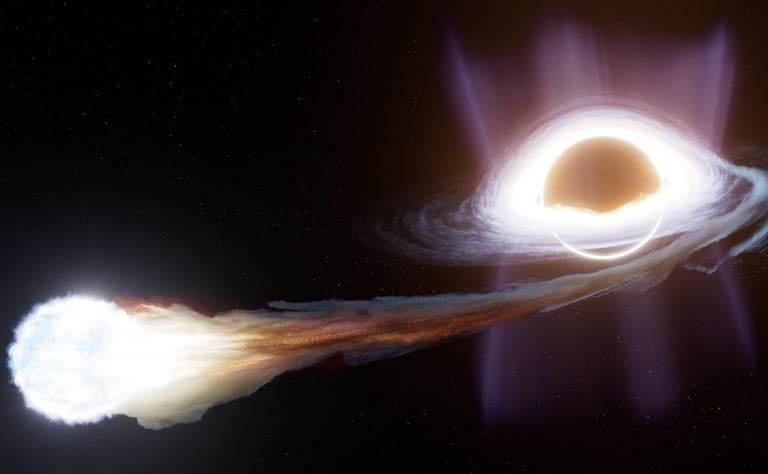
But the real head-scratcher? A star in the Andromeda galaxy that pulled a Houdini act. Using data from NASA's retired NEOWISE mission, scientists tracked M31-2014-DS1, which flared up in infrared back in 2014 before fading dramatically in visible light. By 2023, it was 10,000 times dimmer. No explosion. No remnants. Just a direct collapse into a black hole weighing about five suns. Published Thursday in Science, the study dubs it a "failed supernova," and they've even spotted a potential second candidate. This flips the script on stellar evolution textbooks, which pegged supernovae as the main black hole factory.
So, what's the big picture? These discoveries suggest "quiet collapses" might be more common than we thought, quietly birthing black holes without the drama. It challenges our models and opens doors to spotting more of these stealthy events with future telescopes like the James Webb or Nancy Grace Roman. We're witnessing stellar autopsies in real time—well, cosmic real time—and it's reminding us how much mystery still lurks in the universe.