The Rise of Dream Dojo Inside NVIDIA’s Vision for World-Model Robotics
NVIDIA’s Dream Dojo uses 44,711 hours of human video to train robots with world-model AI. Discover how this open-source system could transform robotics, simulation, and real-world automation. The Rise of Dream Dojo Inside NVIDIA’s Vision for World-Model Robotics
TECH AND SCIENCE
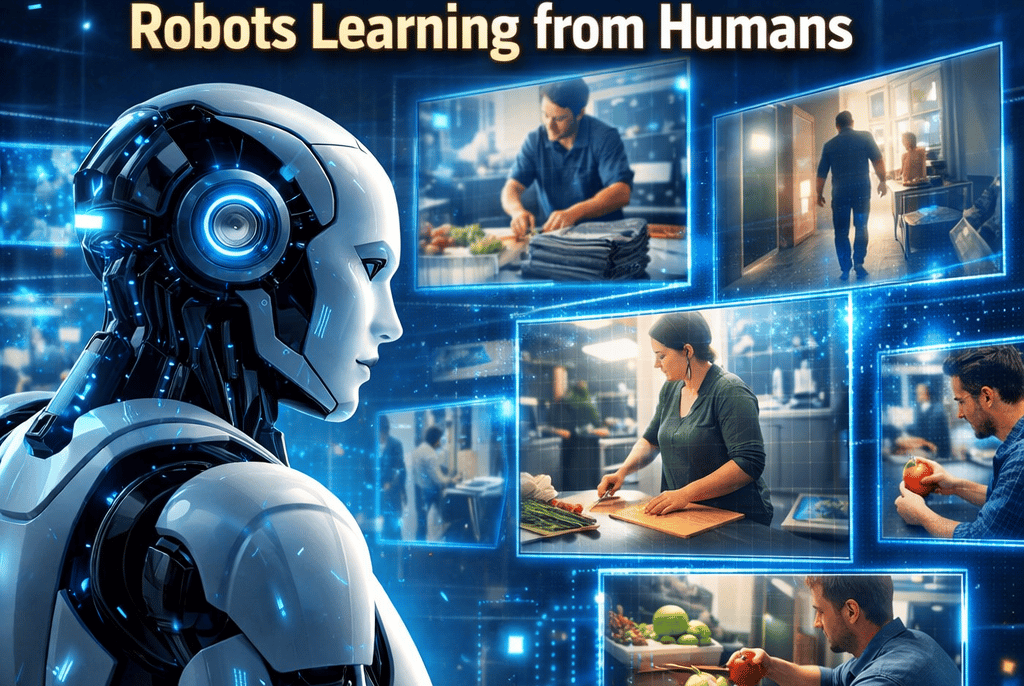
NVIDIA Unleashes Dream Dojo: Robots 'Dreaming' from 44K Hours of Human Life
Folks, the robot uprising just got smarter—and way more open-source. NVIDIA dropped DreamDojo this week, a foundation world model trained on 44,711 hours of raw human video. That's like binge-watching five straight years of first-person footage to teach bots how we move through the world. No simulators, no hand-coded physics—just pure prediction power. As a reporter who's chased robotics hype for years, this feels like the real deal.
The Human Video Goldmine
DreamDojo-HV is the star: 6,015 tasks, 1M+ trajectories, 15x bigger and 2,000x more diverse than prior datasets. Think chopping onions, folding shirts, dodging kitchen chaos—all from our egocentric cams. The genius? "Continuous latent actions." Videos lack robot controls, so researchers inferred them self-supervised, turning any human clip into motor-command gold. Pretrained on 256 H100s, it predicts future pixels from actions. Boom—simulation 2.0, minus the fake physics.
From Dreams to Real Robots
Post-training adapts it to hardware like GR-1 or AgliBot humanoids. Distilled for speed (10.81 FPS, minute-long rollouts), it powers VR teleop, sim-free policy tests, and planning. Real-world win: 17% better fruit-packing. Two models released—2B and 14B params—on Cosmos-Predict2.5. Code, weights, benchmarks: all free on GitHub. NVIDIA's not gatekeeping; they're ecosystem-building.
Why Now? The Crowded Robot Race
Jensen Huang nailed it at CES 2026: "ChatGPT for robotics." With $26.5B in 2025 robot funding, everyone's gunning for world models. Google DeepMind's Genie 3 generates game worlds; 1X's 1XWM eyes humanoids. Dream Dojo joins the fray, tying research to NVIDIA's stack. Dr. Jim Fan tweeted: "Simulation 2.0. Time for robotics to swallow the bitter lesson pill." Collaborators from Berkeley, Stanford, HKUST, UT Austin vouch for its chops.
The Big Bet—and Risks
This scales physical AI. Imagine home bots that get your messy kitchen, not scripted demos. But hurdles loom: data biases from human vids, sim-to-real gaps, compute hunger. Still, open-sourcing lowers barriers—indies can fine-tune without billions.
As I type from Mumbai (shoutout to my bustling streets inspiring better nav algos), Dream Dojo screams progress. Robots won't conquer tomorrow, but they'll fold laundry better. Watch this space.